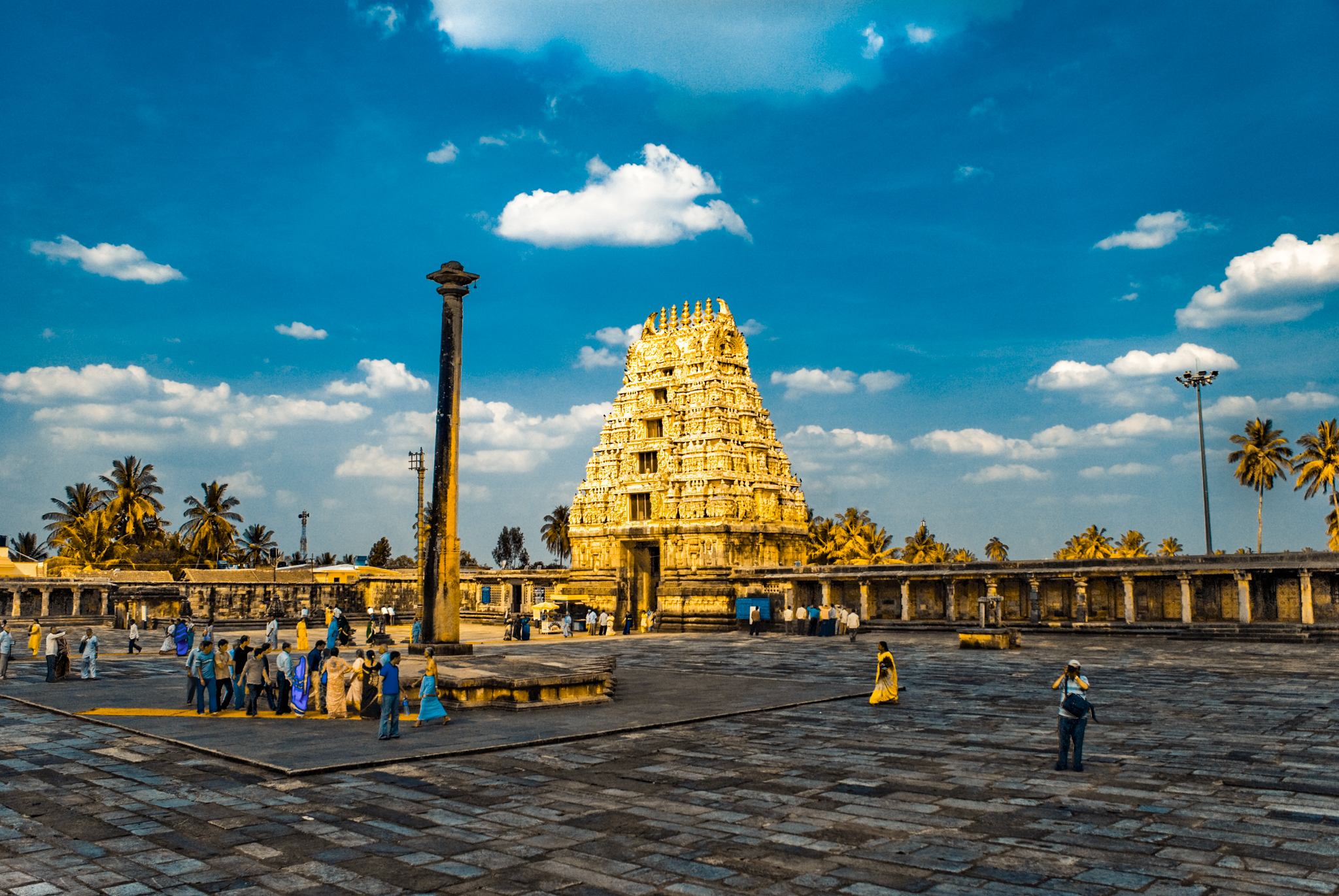
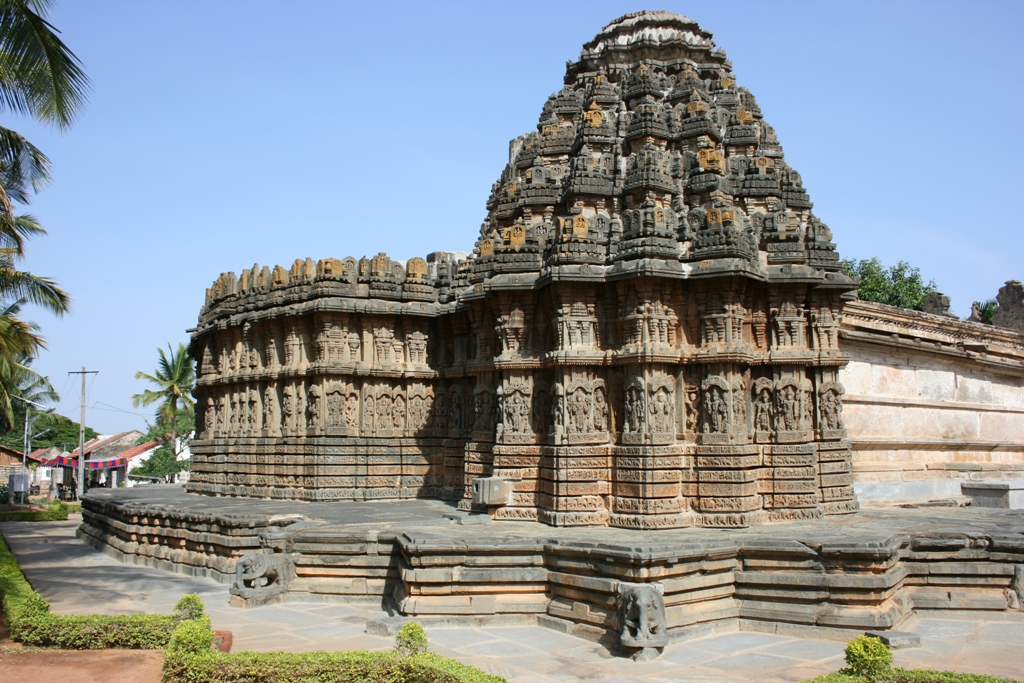
Hoysala Templesಹೊಯ್ಸಳ ದೇವಾಲಯಗಳು
Epigraphical Chronology · 1000 – 1343 CE

The Hoysala Epoch in Time

ಹೊಯ್ಸಳ ಸಾಮ್ರಾಜ್ಯದ ಕಾಲಗಣನೆ

Spanning over three centuries, the Hoysala dynasty transformed the southern Deccan from rustic Malnad hill territories into an empire of breathtaking architectural grandeur. Follow the royal reigns, military campaigns, and successive temple foundations that defined the era.

c. 1000 – 1108•Nripa Kama II & Vinayaditya

Dynastic Dawn in the Malnad Hills

ರಾಜವಂಶದ ಉದಯ

Originating in the hill tracts of Angadi (Sasakapura) in the Western Ghats, early Hoysala chieftains served as Western Chalukyan feudatories. The foundational lore recounts young prince Sala striking down a leaping tiger on the command of his Jain ascetic guru ('Poy Sala!' — 'Strike, Sala!'), establishing the royal dynasty and emblem.

TODO: verify exact accession dates of 11th-century hill chieftains.
c. 1026Historical Event

Early Hill Stronghold Established

Nripa Kama II establishes territorial influence in Chikkamagaluru hills as a Western Chalukya tributary.

c. 1062Historical Event

Capital Shifted to Dwarasamudra (Halebidu)

Vinayaditya strengthens administration and establishes Dwarasamudra amid deep irrigation tanks.

1108 – 1152•King Vishnuvardhana (Bittideva)

The Monumental Age of Vishnuvardhana

ವಿಷ್ಣುವರ್ಧನನ ಸುವರ್ಣ ಯುಗ

Vishnuvardhana's military conquest of Talakadu from the Chola viceroys in 1116 triggered an architectural revolution. The king, guided by Sri Ramanujacharya, embraced Srivaishnavism while maintaining eclectic patronage of Shaivism and Jainism, commissioning monumental temples in soft chloritic schist.

TODO: verify exact completion dates of secondary navaranga additions.
1114Temple Foundation

Consecration of Lakshmi Devi Temple

Doddagaddavalli's rare quadruple (chatuskuta) sanctuary founded by merchant-patron Kulla and his wife Sahaja Devi.

1117Temple Foundation

Royal Dedication of Belur Chennakeshava

Consecration of the ekakuta Vijayanarayana (Chennakeshava) temple at Belur to commemorate triumph at Talakadu.

c. 1121Temple Foundation

Foundation of Halebidu Hoysaleswara

Construction begins on the colossal dvikuta double Shiva sanctuary under high officer Ketamalla.

1173 – 1220•Veera Ballala II

Imperial Sovereign Expansion under Ballala II

ವೀರ ಬಲ್ಲಾಳನ ಸಾರ್ವಭೌಮ ವಿಸ್ತರಣೆ

Veera Ballala II declared total independence from the weakening Western Chalukyas, defeating the Kalachuris and Sevunas. Royal officers, generals (dandanayakas), and queens sponsored jewel-like temples featuring hyper-refined lathe-turned pillars and multi-banded narrative friezes across Karnataka.

TODO: verify dates of northern territorial expeditions.
1171Temple Foundation

Brahmeshvara Temple at Kikkeri

Commissioned by royal patroness Bammaladevi, exhibiting curved vimana contours.

1173Temple Foundation

Buchesvara Temple at Koravangala

Dedicated by royal officer Buchiraja on the exact coronation day of King Veera Ballala II.

1196Temple Foundation

Amrutesvara Temple at Amruthapura

Amrutheshwara Dandanayaka commissions a sprawling temple featuring 140 ceiling panels depicting the epics.

c. 1200Temple Foundation

Veera Narayana Temple at Belavadi

A grand trikuta sanctuary dedicated to Vishnu forms, built on an expansive stone platform.

c. 1220Temple Foundation

Ishvara Temple at Arasikere

Celebrated for its complex 16-point star open natyamandapa hall capped with a domical ceiling.

1234 – 1292•Somesvara & Narasimha III

Late Classical Zenith & Architectural Refinement

ನರಸಿಂಹ III ಮತ್ತು ಕಲೆಯ ಉತ್ತುಂಗ

During the mid-to-late thirteenth century, the Hoysala court achieved mathematical perfection in trikuta stellate sanctuaries. Signed master sculptors, most notably Ruvari Mallitamma, covered entire temple enclosures with lace-like narrative reliefs and miniature vimana spires.

TODO: verify signature frequencies across rural secondary shrines.
1234Temple Foundation

Mallikarjuna Temple at Basaralu

Harihara Dandanayaka dedicates a rich trikuta temple carrying exquisite Mahabharata friezes.

c. 1250Temple Foundation

Lakshminarasimha Temple at Javagal

Trikuta temple with extensive wall carvings attributed to the workshop of Mallitamma.

c. 1250Temple Foundation

Lakshminarayana Temple at Hosaholalu

Fine trikuta plan with deeply undercut friezes and ornate ceiling coffers.

c. 1250Temple Foundation

Chennakesava Temple at Aralaguppe

Compact stellate shrine featuring one of Karnataka's finest Ugra Narasimha wall relief sculptures.

1258Temple Foundation

Consecration of Somanathapura Chennakesava

High commander Somanatha Dandanayaka consecrates a textbook trikuta masterpiece enclosed in a cloistered courtyard.

1292 – 1343•Veera Ballala III

The Crucible Era & Transition to Vijayanagara

ಸಾಮ್ರಾಜ್ಯದ ಅಂತ್ಯ ಮತ್ತು ವಿಜಯನಗರ ಸ್ಥಾಪನೆ

In 1311 and 1327, armies of the Delhi Sultanate under Malik Kafur and Muhammad bin Tughlaq raided and devastated the Hoysala capital of Dwarasamudra. King Veera Ballala III relocated his defensive court, organizing fierce resistance across southern India until falling at the Battle of Madurai in 1343. His commanders and artisans provided the direct administrative and architectural foundation for the emerging Vijayanagara Empire.

TODO: verify exact troop routes of 1327 Tughlaq incursion.
1311Historical Event

First Sacking of Dwarasamudra

Malik Kafur's expedition forces concessions from King Ballala III, damaging outer city walls.

1343Historical Event

Fall of Ballala III & Rise of Vijayanagara

Following Ballala III's demise, Hoysala territory, master stone guilds, and defenses merge into the Sangama brothers' fledgling Vijayanagara state.

Continue the Architectural Journey

Discover How They Were Carved

Explore our interactive guide to stellate ground plans, lathe-turned bell columns, and continuous narrative friezes.