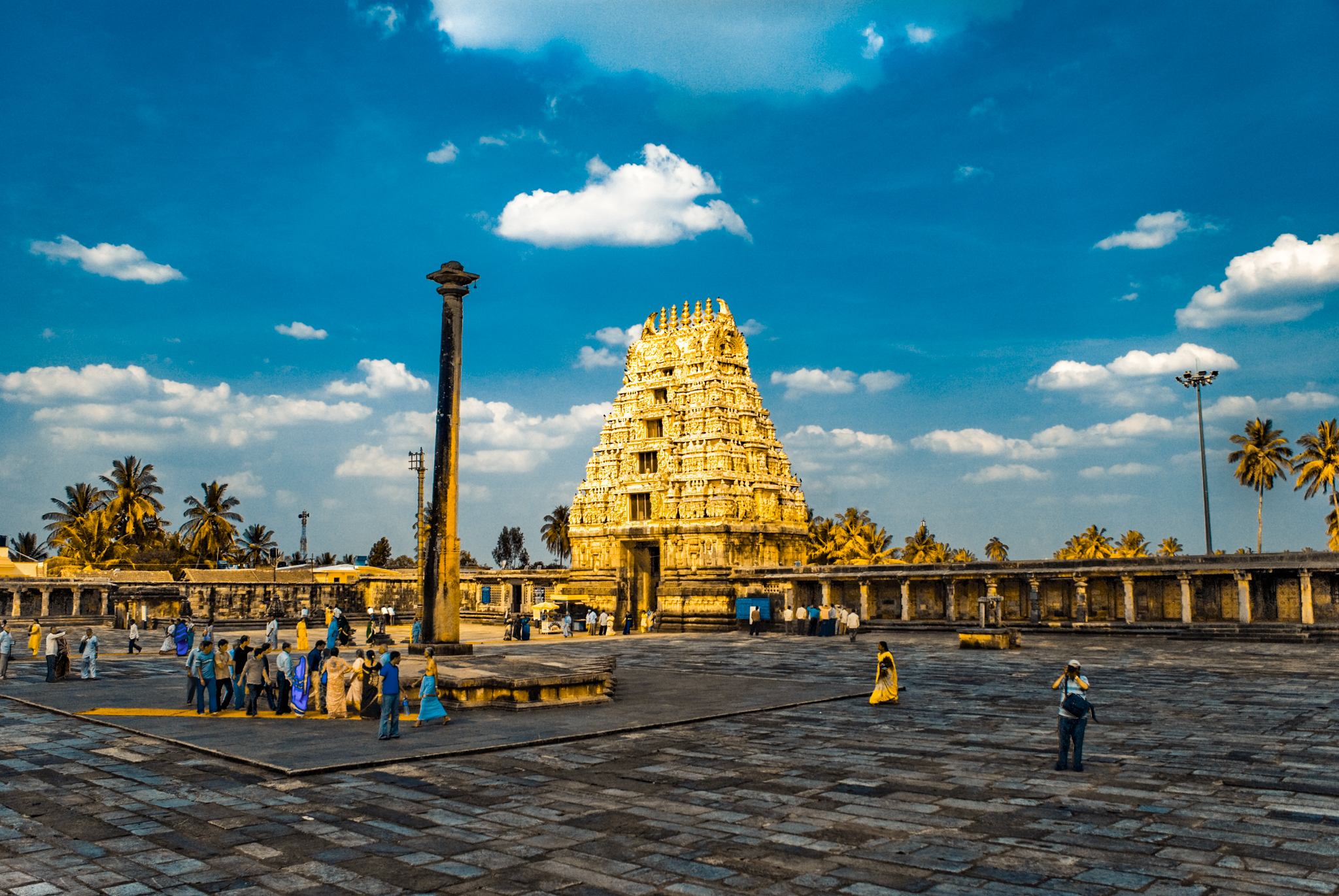
Chennakeshava Temple
ಚೆನ್ನಕೇಶವ ದೇವಾಲಯ
- Consecration· ನಿರ್ಮಾಣ ಕಾಲ
- 1117 (12th Century)
- Royal Patron· ಪೋಷಕರು
- Vishnuvardhana
- Sanctum Deity· ಪ್ರಧಾನ ದೈವ
- Chennakeshava (Vishnu)
- Territory· ಸ್ಥಳ
- Belur, Hassan
- UNESCO Heritage· ವಿಶ್ವ ಪರಂಪರೆ
- Inscribed 2023 (Sacred Ensembles of the Hoysalas)
The Chennakeshava Temple in Belur, Hassan district, Karnataka, is a magnificent example of Hoysala architecture, commissioned by King Vishnuvardhana in 1117 CE. Dedicated to Lord Vishnu, the temple is renowned for its intricate stone carvings, detailed sculptures, ornate pillars, and beautifully sculpted figures depicting scenes from Hindu mythology. Built primarily from soapstone, the temple showcases the exceptional craftsmanship of Hoysala artisans, with every wall and pillar featuring remarkable artistic detail. Its iconic sculptures, including the famous Madanikas, or celestial dancers, demonstrate extraordinary skill and precision. Situated on the banks of the Yagachi River region, the temple served as an important religious and cultural centre during the Hoysala period. Today, the Chennakeshava Temple stands as one of Karnataka's most treasured historical monuments and a significant landmark in the study of Indian temple architecture.
Sanctuary Gallery & Details
Historical Foundations of Chennakeshava Temple
The Chennakeshava Temple in Belur was commissioned by Hoysala King Vishnuvardhana in 1117 CE, marking an important milestone in the political, religious, and cultural history of the Hoysala dynasty. Its construction is traditionally associated with the king’s military victories and the growing influence of Vaishnavism in the region. Built over several decades, the temple became a prominent centre of worship and artistic excellence, reflecting the Hoysalas’ ambition to establish a distinctive architectural identity. Its intricate soapstone carvings, sculptural narratives, and ornate architectural elements reveal the sophisticated craftsmanship and religious imagination of medieval Karnataka. More than a place of worship, the temple represents the dynasty’s royal patronage, cultural aspirations, and enduring contribution to South Indian temple architecture.
Architectural Elements & Design
The distinctive sculpture and structural innovations that define the sanctuary layout at Chennakeshava Temple.
Ekakuta stellate plan with a large pillared navaranga
Soapstone wall sculpture including signed madanikas
Lathe-turned pillars with ring mouldings
Visiting Sanctuary & Access
Operational Schedule & Entry
The Chennakeshava Temple in Belur is open daily from 7:30 AM to 7:30 PM, with a midday closure from 1:00 PM to 1:30 PM. Entry to the temple complex is free, as it remains an active place of worship. Visitors can explore its historic architecture, intricately carved pillars, and sculptural galleries while respecting ongoing religious activities. Photography is generally permitted in the complex, but photography of the main deity inside the sanctum is prohibited. Visitors should follow on-site instructions regarding restricted areas and religious observances. Timings and access rules should be reconfirmed with the temple administration before visiting, as operational arrangements may change
Location & Transit Hub
Situated in Belur, Hassan district (Hassan circuit). Accessible via state highways with local taxi/bus links from district headquarters.
Preservation & ASI Guidelines
Protected national monument. Footwear must be deposited at the outer entrance before stepping onto the raised soapstone jagati (platform). Flash photography inside inner sanctums is restricted.
Best Hours of Illumination
Early morning and late afternoon sunlight reveal the deep relief of lathe-turned columns and frieze relief bands with minimum stone heat.
Connected Sanctuaries in the Hoysala Network
Temples linked by geographic proximity and epigraphical trade routes in the regional network.
 Sacred Ring Node~15.16 kmdirect
Hoysaleswara Temple
ಹೊಯ್ಸಳೇಶ್ವರ ದೇವಾಲಯ
Halebidu, Hassan
 Sacred Ring Node~18.19 kmdirect
Lakshmi Devi Temple
ಲಕ್ಷ್ಮೀ ದೇವಿ ದೇವಾಲಯ
Doddagaddavalli, Hassan
 Cross Connection~19.94 kmdirect
Veera Narayana Temple
ವೀರನಾರಾಯಣ ದೇವಾಲಯ
Belavadi, Chikkamagaluru
Lakshmi Devi Temple
ಲಕ್ಷ್ಮೀ ದೇವಿ ದೇವಾಲಯ · Doddagaddavalli